
NASA’s mission, like Artemis II, is pushing limit and industries are raving for precision manufacturing. Engineers are diligent so as not to ignore anything vital. There are leaks that are invisible and such leaks can ground a rocket or recall a product.
A microscopic leak leads to system failure, product recall, or safety hazard. It could be an inefficient refrigeration unit or a medical device with compromised sterility, or an aerospace component failing mid-operation. The price of “almost airtight” is exorbitant to industries, and hence Helium Leak Testing has become the gold standard across modern industries.
What Is Helium Leak Testing?
Helium Leak Testing is a highly sensitive, non-destructive testing (NDT) method used to detect and measure even the tiniest leaks in sealed systems. Bubble testing or pressure decay were traditional methods that missed micro-leaks, but helium testing detects micro and invisible leaks.
Why Helium?
Helium gas is used as a tracer because of its unique properties:
- Chemically inert – won’t react with materials.
- Extremely small atomic size – passes through microscopic leak paths.
- Low natural presence in air – ensures accurate detection.
- Non-toxic & non-flammable – safe for sensitive and high-value equipment
Typical Industrial MSLD Sensitivity:
- Production systems: 10⁻⁶ to 10⁻⁹ mbar·l/s
- Ultra-clean laboratory systems: up to 10⁻¹¹ to 10⁻¹² mbar·l/s
How Helium Leak Testing Works?
Helium is used as a tracer gas and detected using a Mass Spectrometer Leak Detector (MSLD). The system works on ionization principle, where helium ions (mass 4 amu) are separated using magnetic/electric fields and measured by the detector. Since the detector is specifically tuned for helium, it provides highly sensitive leak detection.
Helium Leak Testing Methods:
Vacuum Spray Method
The component is evacuated to high vacuum, and helium is sprayed externally over welds, joints, and seals. If leakage is present, helium enters the system and is detected by the MSLD. This method offers very high sensitivity and precise leak location.
Chamber Vacuum Method
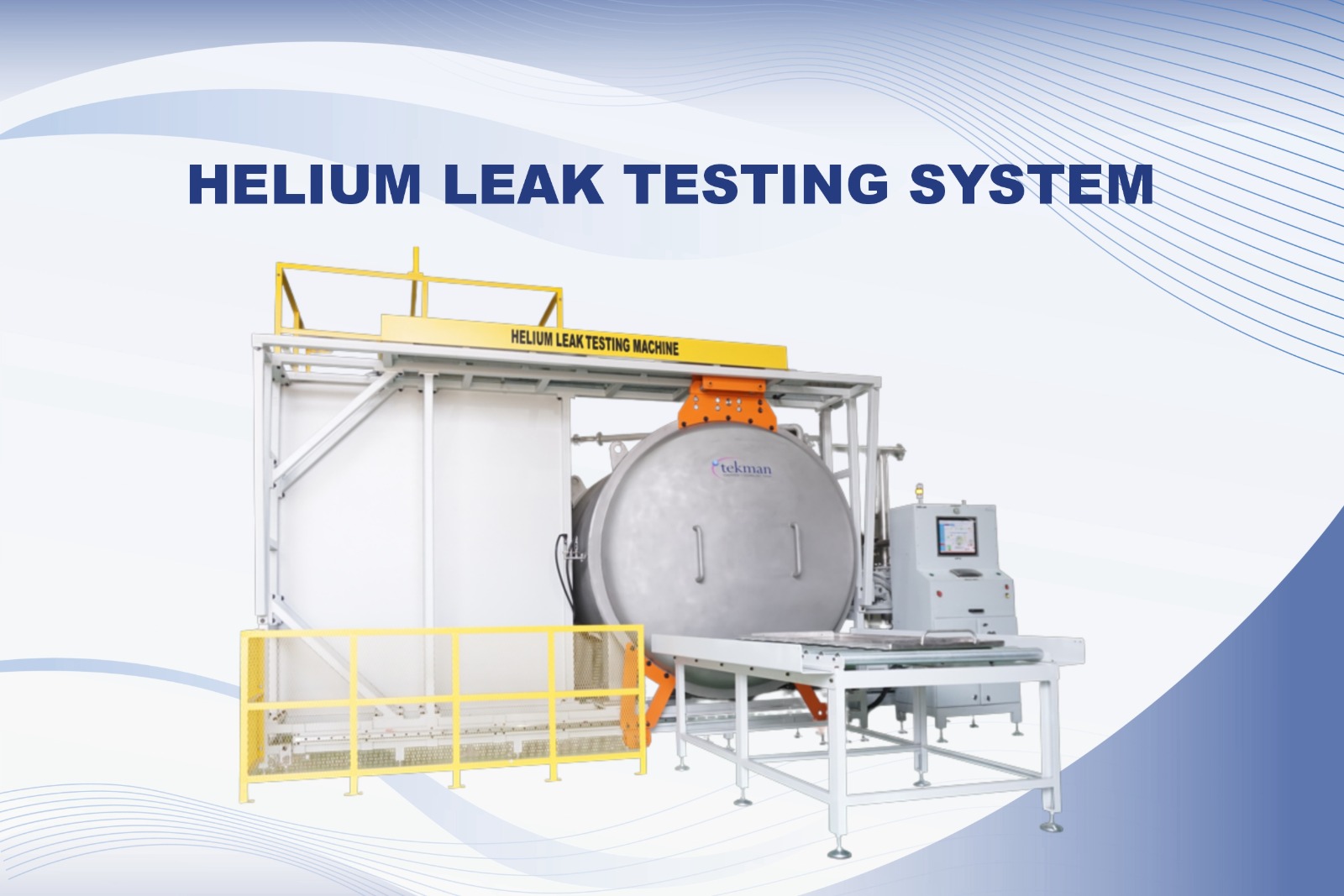
The component is pressurized with helium and placed inside a vacuum chamber connected to the MSLD. Escaping helium is measured quantitatively. This method is commonly used for production and high-integrity components.
Bombing Method
The sealed component is exposed to high-pressure helium, allowing helium to enter through micro-leaks. The part is then placed under vacuum, where trapped helium escapes and is detected by the MSLD. Mainly used for hermetically sealed miniature components.
Sniffer Method
The component is internally pressurized with helium, and a sniffer probe connected to the MSLD is moved around suspected leak areas. Escaping helium is directly detected by the probe. This method is suitable for large systems but has lower sensitivity than hard vacuum methods.
What is the Process of Helium Leak Testing?
The process is simple concept, but the way it is executed is powerful:
1. System Preparation
The component is either evacuated or a vacuum is created. It can also be pressurized internally with 100% helium concentration or mixture of helium and air depending on sensitivity and cost requirement.
2. Helium Exposure
Depending on the method chosen, Helium is sprayed externally for the hard vacuum method or filled inside the component for the sniffer method.
3. Leak Detection
If a leak exists, helium escapes or enters and is detected by the MSLD. It converts it into a measurable leak rate and is displayed in mbar∙L/s or atm∙cc/s. You can select the unit of measurement, as this option is available in the leak detector.
4. Evaluation
The measured value is compared with acceptable limits. If it is within range, it is approved, and if it is beyond limits, then it definitively goes for rework or is rejected.
What makes modern Helium Leak Testing powerful?
Nothing in the above process is guesswork. It is quantitative, traceable, and auditable data. It is smart, automated, and built for Industry 4.0.
Key capabilities include:
- Ultra-high sensitivity - down to 10⁻¹² mbar∙L/s
- Fast cycle times for higher productivity
- PLC/HMI/SCADA integration for seamless control
- Automated testing sequences to eliminate human error
- Advanced vacuum systems - oil-sealed or dry pumps
- Data logging & traceability for audits and compliance
- Custom Design Flexibility - for vacuum or pressure-based testing.
- Predictive maintenance alerts and error tracking audiovisual setup
- Safety interlocks for Vacuum pumps, Chambers, Leak detectors, and boosters
- Authorization controls for security aspects are customizable based on requirements.
Helium Leak Testing boosts the confidence of your entire production line.
Why Industries Are Opting for Helium Leak Testing?
| Task | Task |
|---|---|
|
Ultra-High Sensitivity |
Detects which traditional methods miss |
|
Non-Destructive |
No damage to test components |
|
Quantitative Results |
Data-driven decisions as it gives precise numerical leak-rate data. |
|
Better Quality Control |
Reduces failures & recalls and ensures superior product reliability. |
|
Faster Testing Cycles |
Improves productivity and reduces downtime. |
|
Safe & Eco-Friendly |
No harmful emissions as it is inert and non-toxic |
|
Standard Compliance |
Aligns with global standards like ISO 20454 and ASTM E499. |
Industries today have zero tolerance for error.
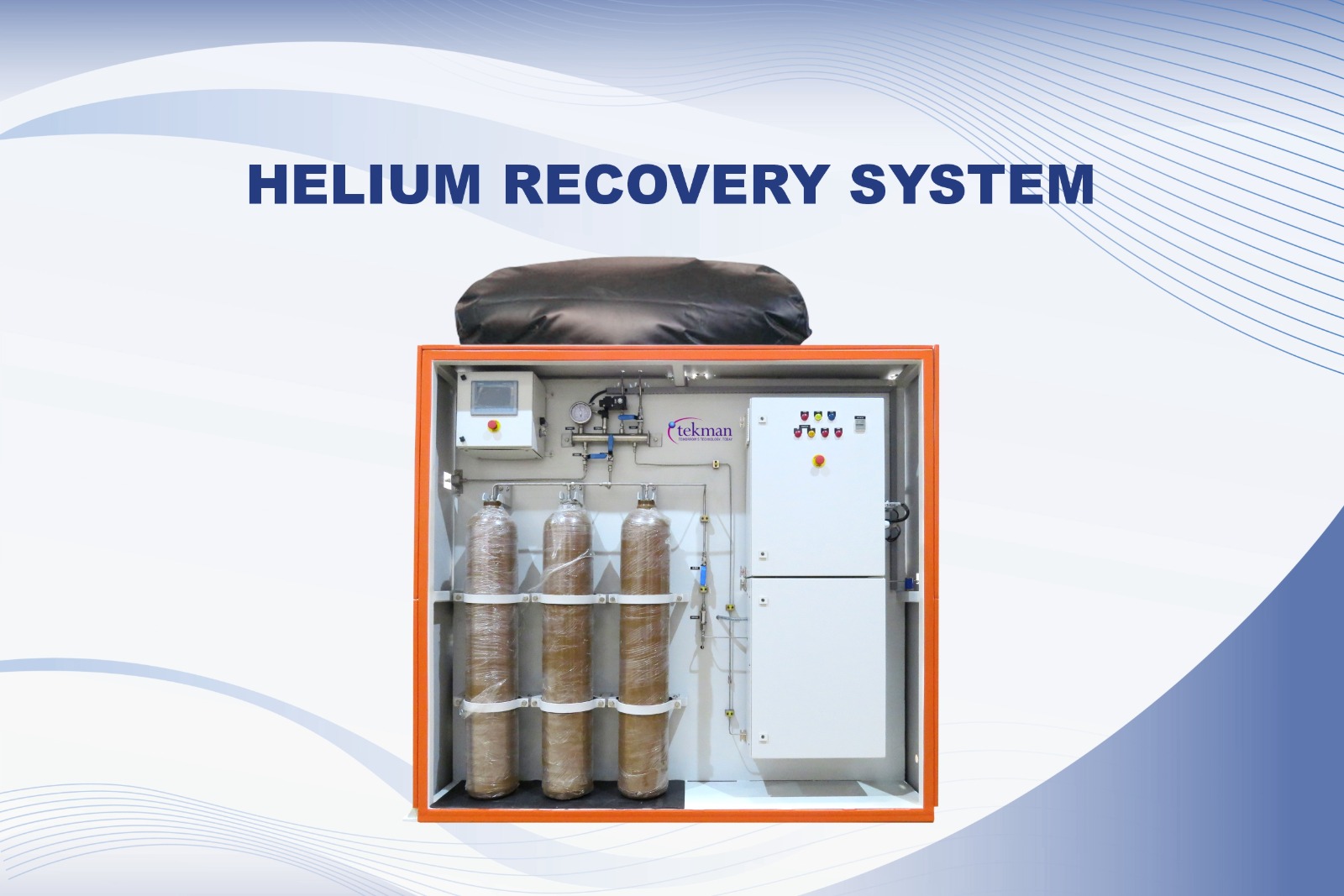
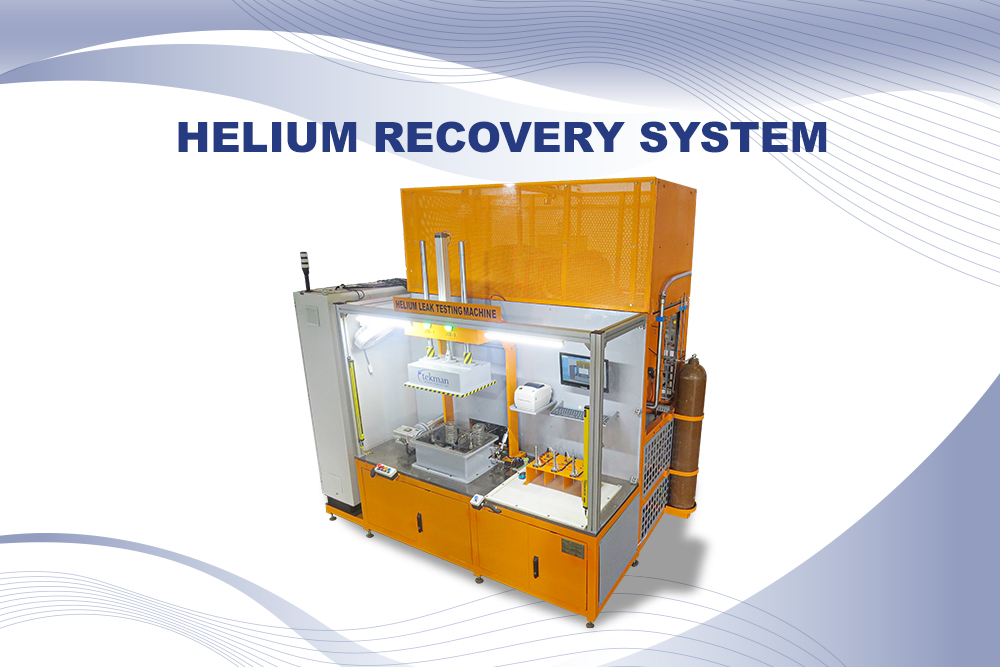
Reliable companies like Tekman India Pvt. Ltd. deliver advanced helium leak testing and recovery systems tailored for real-world industrial challenges. With a strong presence across the automotive and electrical sectors, Tekman’s solutions focus on – Automation, Accuracy, Customization, Compliance.
Industries have come to realise that the Invisible Leak is the Risk they can’t Measure. Quality isn’t something that is inspected at the end of the process, but a vital step at every stage of the production line. And, Tekman’s Helium Leak Testing guarantees performance, ensures safety, and builds trust into every product that leaves the factory floor.