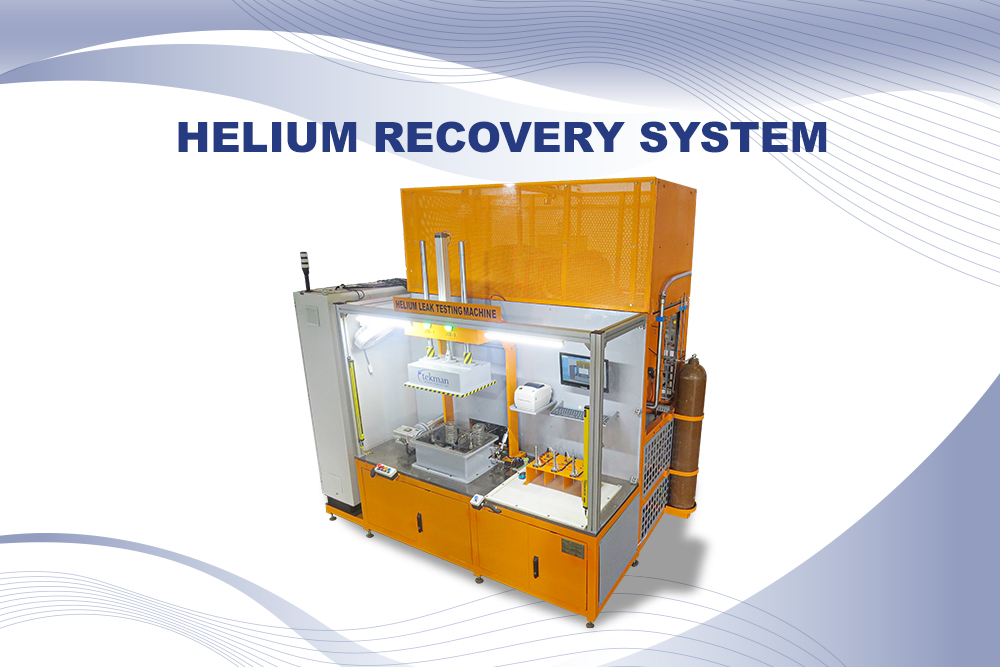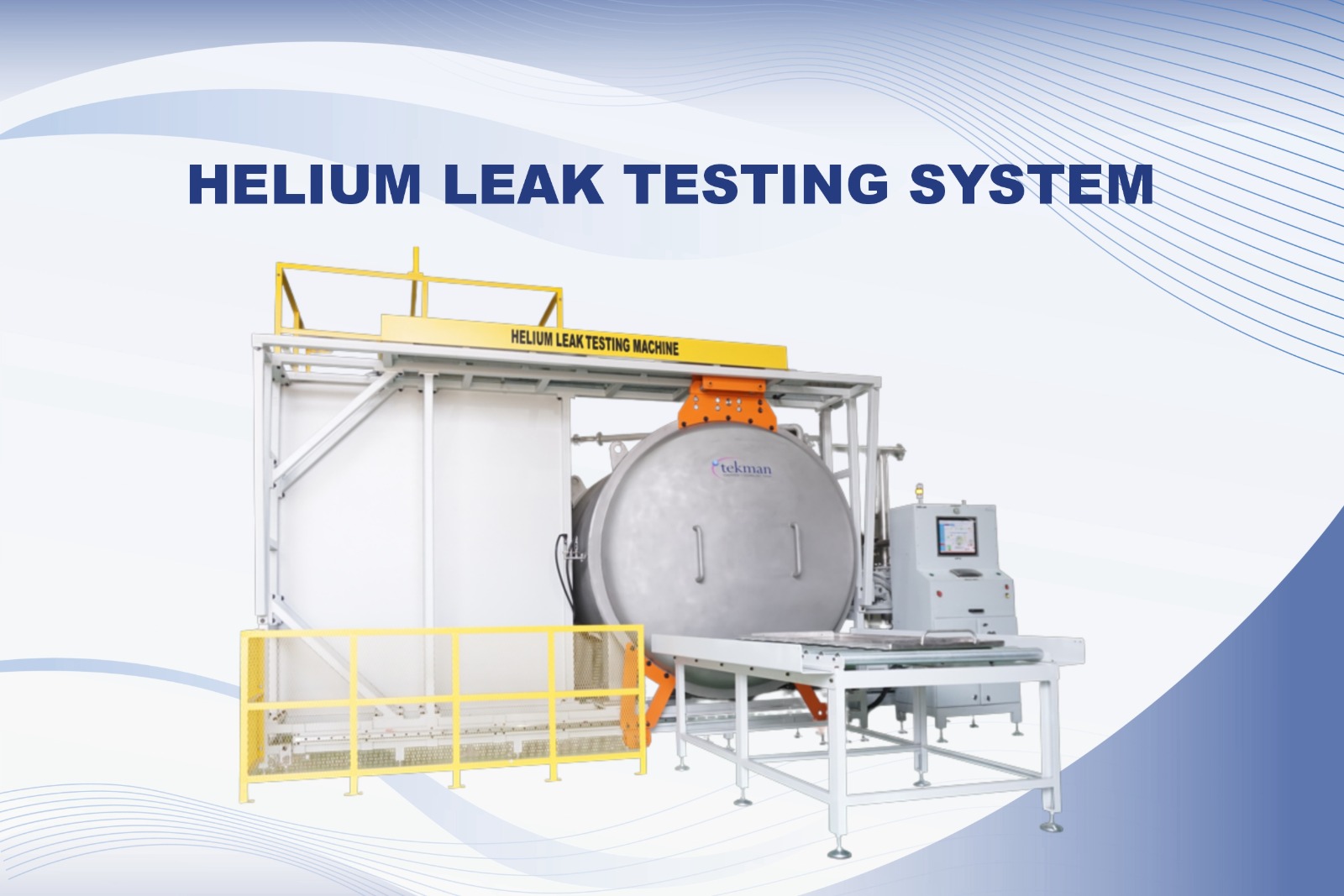

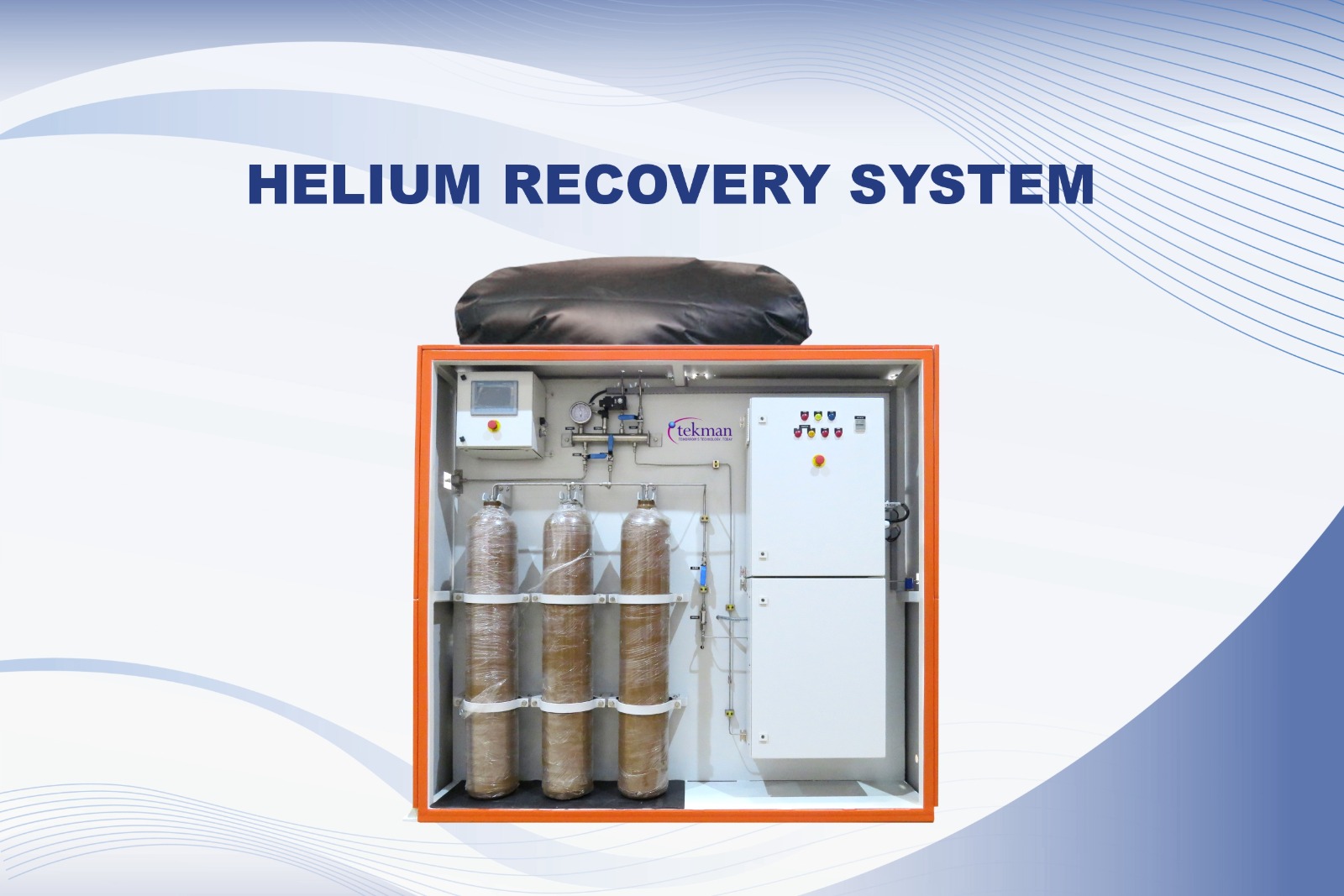
What gets measured gets managed - Peter Drucker, widely known as the father of modern management, had once quoted it.
And, this is absolutely true with regards to Helium leak testing systems to ensure quality in industries like automotive, HVAC, Refrigeration, heat exchangers, and EV battery thermal management.
Helium leak testing detects microscopic leaks that could lead to product performance failure and affect safety and durability. Because of Helium’s unique properties, it can detect ultra-small leaks that traditional pressure decay methods would miss. Hence, helium is the preferred tracer gas. However, in the current times Helium has become expensive and its supply is limited.
This guide will help you with practical tips on cutting helium consumption through high-efficiency recovery—without compromising sensitivity or throughput.
Why Helium Is the preferred Tracer Gas
- Due to its extremely small atomic mass (4 amu), it enables detection of microscopic leak paths.
- It protects material and result as it is a chemically inert and non-reactive gas.
- It is non-flammable and hence safe for all type of test environments.
- It is ideal for mass spectrometer leak detectors with sub-micro standard sensitivity.
How Helium Leak Measurement Works
-
Component evacuation
A vacuum pump removes air, moisture, and residual gases to a target pressure to improve signal clarity and repeatability. -
Helium filling
Post evacuation helium is introduced at the specified pressure/concentration to create a strong partial-pressure gradient that drives tracer gas through any leak paths. -
Detection and quantification
A mass spectrometer leak detector (MSLD) measures helium flow or partial pressure and reports leak rate (e.g., mbar·L/s). -
Pass/fail decision
The leak rate measured is compared with the quality limit defined to determine acceptance or rejection.
This method gives one of the most accurate leak-testing readings.
Which are the Hidden Cost Drivers of Helium Loss
- Venting test gas to atmosphere instead of capturing it.
- Leaky or worn fixtures and seals.
- Non-existent recovery systems.
- Contamination of air which leads to reduction of helium purity.
What is the Helium Recovery Approach
High-yield helium recovery is a system that captures recovered helium gas and also maintains high purity of gas for reuse purpose.
Pre-evacuate before filling
Removes air and moisture, that gives higher internal helium concentration, better detector sensitivity, and cleaner recovered gas.
Pre-evacuation reduces fresh helium consumption and improves recovery efficiency.
Helium Recovery can be done through Vacuum Systems
Post testing, helium should be recovered instead of letting it escape into the atmosphere. Vacuum systems collect and transfer the escaping helium gas to a storage tank or recovery bag for reuse.
An additional vacuum pump can recover residual helium from the component by pulling it down to a preset vacuum level. This increases overall helium utilization and delivers significant gas savings over time, especially in facilities operating multiple leak-testing stations.
What are the Metrics to Monitor Helium Efficiency
- Helium consumption per part
- Parts per cylinder
- Recovery efficiency
- Helium purity levels – both fresh and recovered
- Cycle time impact
- Total gas cost savings abundant
What is the impact of Helium Recovery on Business
- Lower operating costs due to reduced helium procurement
- Supply volatility of Helium doesn’t affect production lines
- Improved quality
- Faster ROI
- Improved sustainability due to reduced venting and waste
Conclusion:
As Peter Drucker correctly quoted, “Efficiency is doing things right; effectiveness is doing the right things.” Helium is industry’s preferred tracer gas due to its efficiency to detect even the smallest leaks with accuracy. Effectiveness lies in using this valuable resource wisely. By combining advanced helium leak testing with efficient helium recovery systems, manufacturers can maintain the highest quality standards and reduce helium consumption. This combination lowers operating costs, and minimizes environmental footprint.
Tekman believes in delivering precision and sustainability. They offer comprehensive helium leak testing solutions – vacuum pre-evacuation, optimized helium concentration, precision leak detection, and efficient helium recovery. Get in touch with us to learn how Tekman can help you improve testing accuracy, reduce helium consumption, and achieve long-term operational excellence.