Industries have shifted to smarter automation and ultra-clean manufacturing. As per a report released in June 2025, global semiconductor production hit a record high because of the rising demand for electric vehicles, AI chips, and renewable energy systems. Behind these innovations is a quiet and powerful force — vacuum technology. Be it a chip fabrication in clean rooms or leak testing in pharma, precision matters, and nothing would be possible without accurate vacuum pressure measurement.
The accuracy of vacuum systems is not a technical luxury; it is a business essential.
Tekman India Pvt. Ltd. recognizes the importance of precise pressure measurement to maintain process consistency, to ensure product integrity, and to protect equipment from damage. Through this blog let us understand more about vacuum pressure gauges, its types and the one that fits your system perfectly.
What Is a Vacuum Pressure Gauge?
Vacuum pressure refers to a pressure level that is below the standard atmospheric pressure – approximately 1013 millibars or equal to 1 atmospheric pressure near ocean surface or at zero elevation. It represents a partial absence of air or gas within a system.
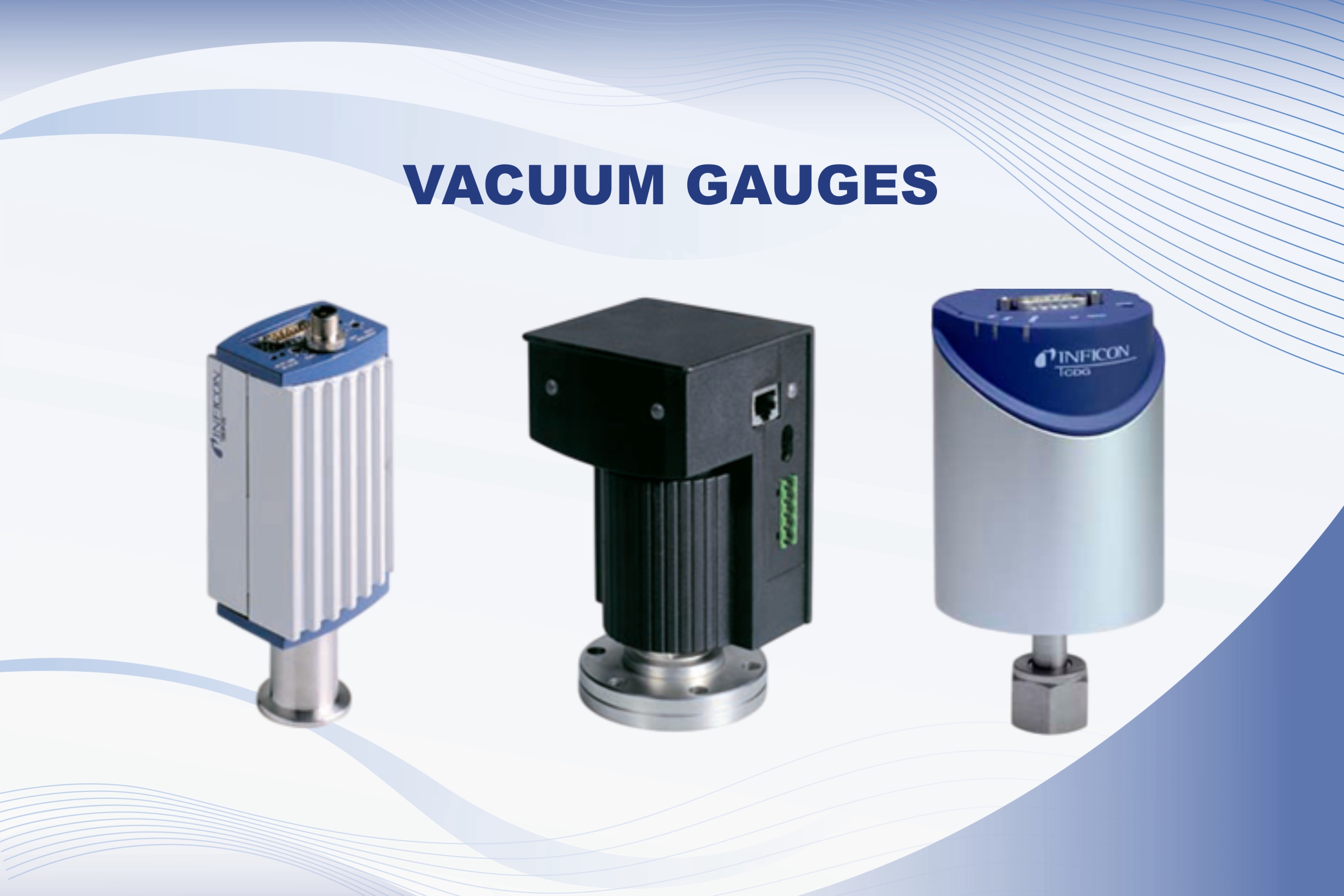
A vacuum pressure gauge measures negative pressure – measures the vacuum or the low pressure within an enclosed system. You need to think of it as measuring how empty a system is. A vacuum pressure gauge is important because few industries need particle-free environments, as even a small pressure deviation will lead to costly consequences.
Vacuum pressure is categorized into different levels:
- Rough Vacuum: 1000 mbar to 1 mbar
- Fine/Medium Vacuum: 1 mbar to 10⁻³ mbar
- High Vacuum: 10⁻³ mbar to 10⁻⁷ mbar
- Ultra-High Vacuum: < 10⁻⁷ mbar
Each range demands a specific type of gauge as one size never fits all.
Why Accurate Vacuum Measurement is Non-Negotiable
Industries like semiconductors, pharma, automotive, packaging, metallurgy, and leak detection all run on tight tolerances. The consequences of incorrect vacuum reading will lead to:
- Process failure
- Process failure
- Equipment malfunction
- Increased energy consumption leading to higher energy bills
We need energy-efficient, contamination-free, and sustainable manufacturing and hence the role of vacuum pressure gauges has never been more critical.
How Do Vacuum Gauges Work?
Vacuum gauges register the change in physical properties as the pressure drops. These changes might involve:
- Mechanical deformation (as in Bourdon tubes and diaphragms)
- Transfer of heat – how quickly a heated wire cools down in thinner air - Pirani and thermocouple gauges)
- Electrical properties (as in ionization gauges)
Different types of Vacuum pressure gauges
1. Mechanical Vacuum Gauges
They work on mechanical motion; it measures the changing pressure – like the stretching of a Bourdon tube or diaphragm.
- Bourdon Tube: A Curved tube straightens or coils depending on the vacuum level, it moves a needle on a dial.
- Diaphragm: Pressure causes the diaphragm to deflect. The movement thus caused is translated into a pressure reading.
Range: 1000 to 1 mbar (Rough vacuum)
Used in: HVAC, vacuum packaging, general industrial applications
2. Thermal Conductivity Gauges
These gauges measure the rate at which a heated wire or filament loses heat due to the surrounding gas. In a vacuum, fewer gas molecules are available to carry away heat, so the wire stays hotter.
- Pirani Gauge: Detects variations in the electrical resistance of a heated wire as ambient pressure decreases.
- Thermocouple Gauge: It tracks temperature changes using a thermocouple connected to a heated filament.
Measurement range is from rough to fine vacuum, between 10⁻³ and 10 millibar.
Used in: Leak testing, vacuum furnaces, drying systems
3. Capacitive Gauges
Capacitive gauges measure the diaphragm’s deflection. The changes are detected electronically via change in the capacitance. No mechanical movement – only stable electronic readings.
Range: Wide — from atmospheric to high vacuum
Used in: Semiconductor fabs, pharmaceutical processing, corrosive gas environments
4. Ionization Gauges
It is used for ultra-clean, ultra-deep vacuums. These gauges ionize gas molecules and measure resulting ion currents — a direct readout of vacuum levels.
- Hot Cathode Gauge (Bayard-Alpert): Uses a heated filament for electron emission.
- Cold Cathode Gauge: No filament heating is needed, as high-voltage is used for ionization.
Range: (10⁻⁵ to 10⁻¹² mbar (High to ultra-high vacuum)
Used in: Thin-film deposition, space research, nuclear labs
How to choose the Right Vacuum Gauge?
There is no “best” gauge, it is about the “right” one for your process.
You need to consider the following:
- Vacuum range (fine, rough, high to ultra-high)
- Gas type (inert, reactive, corrosive)
- Accuracy and response speed
- Risk of contamination
- System integration (digital output, remote monitoring)
At Tekman India, we help you decode this complexity and select gauges that give you precision with practicality. For your custom-fit vacuum solutions, let Tekman India be your pressure partner.