
As soon as we hear the word “leaks,” our minds start to panic. But let’s pause for a moment and think about the kind of leaks we’re talking about. Surprised? Let us explain.
For industries such as Refrigeration & Air Conditioning, Automobile, Aerospace, Medical Devices, and even Semiconductors, one needs to ensure airtight systems for the precision of work. One small leak may land us in big trouble. It could lead to performance failure safety hazards and lead to environmental harm.
The solution is the calibrated leaks.
What Are Calibrated Leaks and Why Do They Matter?
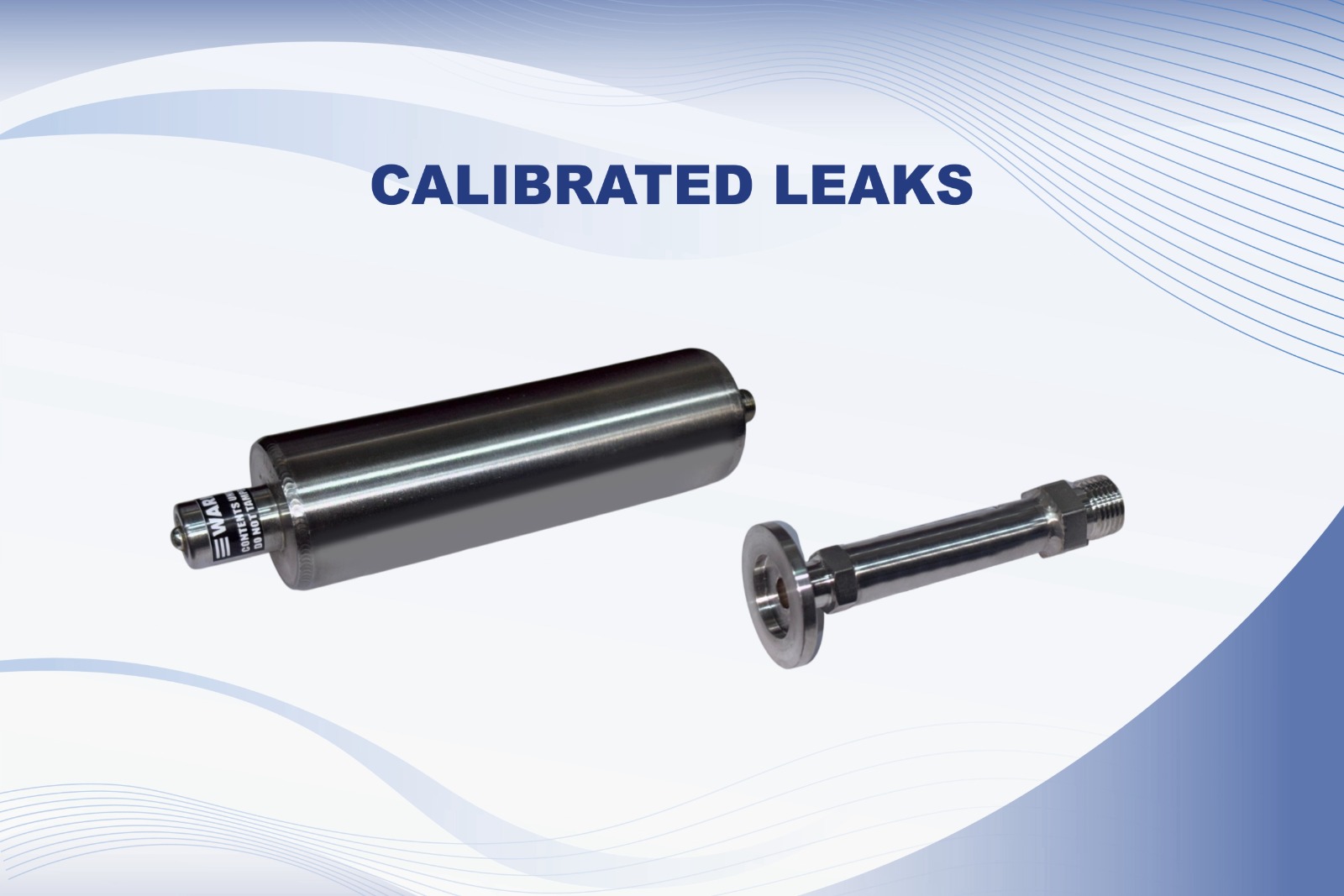
Calibrated leaks or calibration leaks are precision devices designed to let out a controlled, known amount of gas to verify that leak detectors are doing their job right. It helps to establish pass/fail criteria for leak detection systems and instruments. Gas-tightness is a must for various engineering applications – pipelines, pressure vessels, vacuum systems, refrigeration units, and semiconductor manufacturing.
A specific amount of gas is introduced into a system and the device validates the accuracy or leak detector measurements. It is like your system’s personal trainer as it tests its endurance, measures its performance, and makes sure it’s always in peak condition.
So, why do we need them?
- Quality Control: They are essential to ensure the precision and dependability of gas leak detectors, across sectors like automotive, aerospace, and healthcare to identify leaks in vacuum systems, components, and equipment.
- Regulatory Compliance: Calibrated leaks help meet tight tolerances and legal standards for leak rates as defined by the regulatory bodies.
- Reliable Testing: They simulate real-world leak scenarios in a controlled way — this gives your system the validation you need without the chaos.
- Efficiency & Safety: By verifying your detection systems with known leaks, you can reduce downtime, avoid faulty products, and enhance safety.
How Do Calibrated Leaks Work?
These devices are designed based on factors such as required flow rate, leak type, operating pressure, and the type of gas mainly helium or hydrogen.
There are several types:
- Capillary leaks – super-narrow tubes that allow gas to pass through.
- Orifice leaks – has precisely drilled holes for gas flow.
- Permeation leaks – lets the gas diffuse slowly through the materials like Teflon.
The materials used are tested for chemical compatibility and durability and most are built using stainless steel or high-performance polymers. Few are pre-sealed with gas which guarantees consistent flow and repeatable reference flow over time.
A little bit of the science part to understand the concept better!
It all works on the principle of controlled molecular or laminar flow through a small orifice, capillary tube, or permeable material. Pressure differentials are applied across the device. Gas moves from high pressure to low pressure, and passes through a tiny opening at a known, controlled rate.
The range is from 1 × 10⁻⁹ to 1 × 10⁻³ mbar·L/s
The leak rate is tested and regulated with standard gases – helium and hydrogen gas in units like atm·cc/sec or mbar·L/s. That known rate is then used to calibrate or verify leak detectors to ensure your equipment is efficient and reliable.
Where Are Calibrated Leaks Used?
Let us see how different industries benefit from these:
- Testing Leak Detectors: Calibrated leaks are used to verify and adjust the sensitivity of Industrial Hydrogen or Helium leaks like mass spectrometers or Sensistor systems.
- Manufacturing QA: It is used to verify the integrity of vacuum chambers and components by simulating standard leak conditions.
- Aerospace & Automotive: It ensures critical parts (like fuel systems or air conditioners) meet strict leakage standards.
- Medical Devices: It allows companies to establish or verify leak rate limits for a given product or process. Pacemakers to infusion pumps can’t risk these devices to leak.
- R&D Labs & Training: It is used in labs or training centres to replicate leak scenarios to train professionals. It also helps the study of leak mechanisms and development of new leak detection technologies.
- Packaging & Electronics: It is important for sealed devices like sensors, chips, and hermetically sealed packages.
Small Leak, Big Impact
In industries where accuracy, safety, and compliance are mandatory, calibrated leaks are the support system of reliable leak detection systems. It helps you catch problems before it turns into a disaster.
If it is a Leak, then panic but if it is a Calibrated leak then just be assured that it is your weapon for excellence. Do you need help with choosing the right calibrated leak for your application? Connect with us now.