
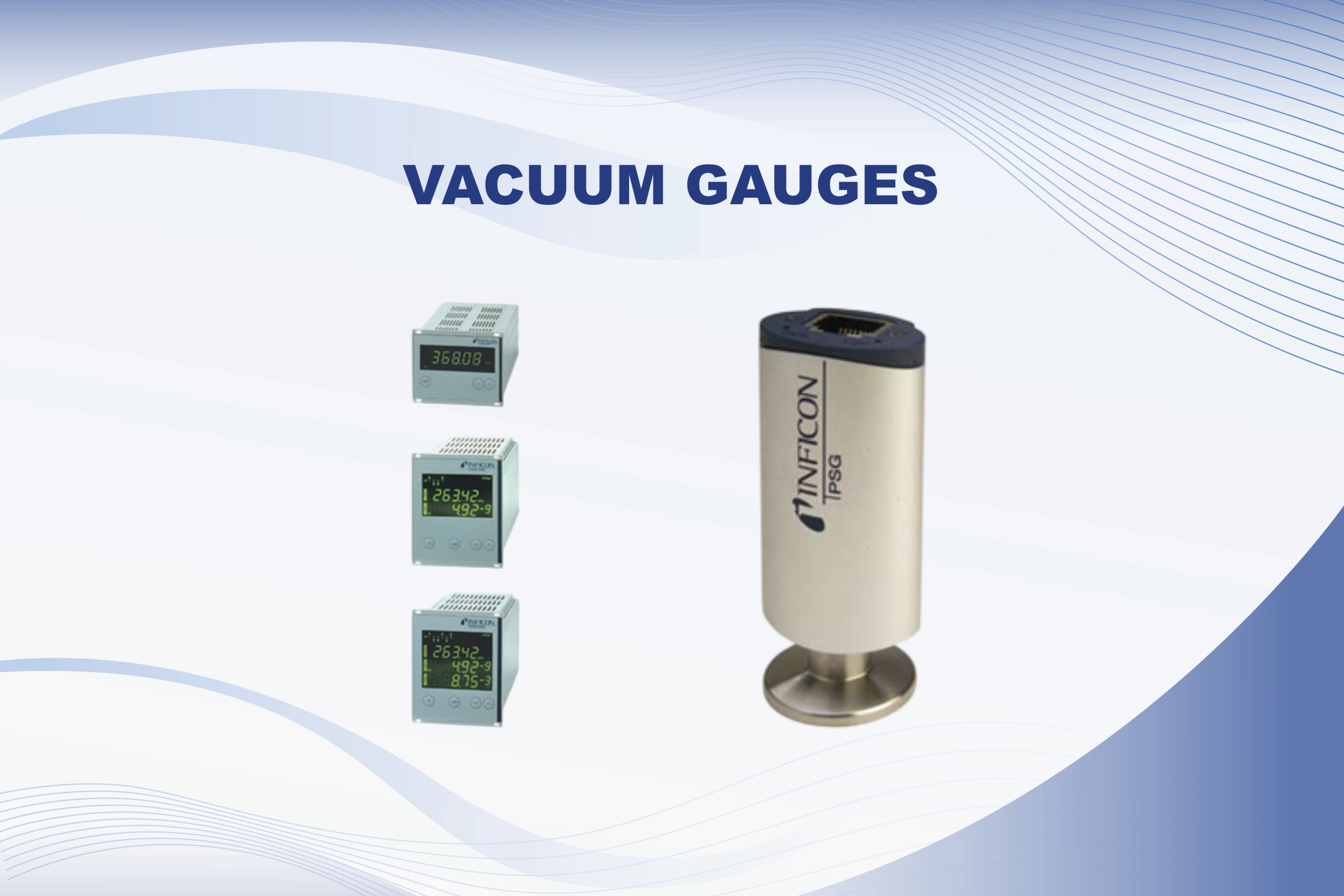
Is your vacuum gauge right for your application?
When building or maintaining a vacuum system, the above question often arises: whether it is the industrial manufacturing, a research laboratory, or the semiconductor industry, accurate vacuum measurement is essential for process control, safety, and efficiency.
You have so many options—Pirani gauges, ionization gauges, capacitance manometers, thermal conductivity sensors—how do you know which one is right for you?
This guide will help you understand key factors to consider when you select a vacuum gauge. Whether you are upgrading your existing setup or starting from scratch, these insights will help you make the right choice for reliable and efficient operation.
1. Identify Your System's Vacuum Range
The most critical step in gauge selection is the vacuum range your system operates in. Vacuum pressure is divided into:
- Rough Vacuum: Atmospheric pressure to ~1 mbar
- Medium Vacuum: 1 to 10⁻³ mbar
- High Vacuum: 10⁻³ to 10⁻⁷ mbar
- Ultra-High Vacuum: Below 10⁻⁷ mbar
Range decides the vacuum measurement technology.
- For medium to rough applications, Pirani gauges are ideal vacuum guages
- Capacitance manometers are for medium vacuum applications.
- Ionization gauges are for vacuum range – high to ultra-high.
If you use the wrong gauge type, it will give you inaccurate readings or cause damage to the sensor.
2. Accuracy and Sensitivity Requirements
If your applications involve process control, such as semiconductor manufacturing, thin-film deposition, or plasma processing, then you need accurate and precise readings.
- Capacitance diaphragm gauges offer high sensitivity and are not dependant on gas. It makes it apt for applications that require repeatable and reliable readings.
- A high level of accuracy is not essential for general applications like leak detection.
You can optimize performance and cost if you match the gauge’s resolution to your application needs.
3. Type of Gas in the Vacuum System
Vacuum gauges respond differently to different types of gases.
- Thermal conductivity gauges like Pirani and thermocouple types are gas-dependent so their readings will vary based on the gas type.
- If your application needs reactive or mixed gases, then you need to choose gauges with gas correction features or choose gas-independent sensors such as capacitance manometers.
4. Response Time: Fast Feedback
Fast or quick response is crucial in processes where pressure changes rapidly—like vacuum drying, freeze-drying, or leak detection.
- You should choose vacuum gauges that provide real-time pressure feedback.e changes rapidly—like vacuum drying, freeze-drying, or leak detection.
- Combination gauges like Pirani + cold cathode are an excellent choice for systems covering multiple vacuum ranges.
They improve process control by offering broad coverage with faster response rates.
5. Contamination Risks and Maintenance
You are aware that certain environments like vacuum furnaces, coating chambers, or chemical processing units are more prone to gauge contamination due to dust, chemical exposure, or deposition. Ionization gauges are more vulnerable to degradation in such environments.
- You should use filters, isolation valves, or baffles to protect gauges.
- You should implement regular calibration schedules to extend equipment lifespan and ensure measurement accuracy.
6. Integration and System Compatibility
You need to ensure that a vacuum gauge fits into your existing system design.
- You can ensure compatibility with communication protocols like Analog, RS232, RS485, or Ethernet.
- You should consider physical configuration—flange type, mounting orientation, and available space.
- Some systems may need integration with PLCs, SCADA systems, or remote displays for real-time monitoring and control.
7. Balancing Cost vs. Performance
You can use cost-effective solutions like basic thermal gauges for low-precision applications in the rough vacuum range. However, for your advanced industrial processes, you should invest in high-end gauges as they provide long-term value with reduced downtime, higher process stability, and lower maintenance costs.
You may find the right gauge expensive upfront but it will lead to sizable savings and better productivity in the long run.
8. Environmental and Safety Conditions
The environmental conditions in which the gauge will be operated, is something you need to consider. The following will ensure the gauge’s top performance and workplace safety:
- Ambient temperature
- Vibration exposure
- Presence of corrosive gases
- Cleanroom or explosion-proof requirements
Make an Informed Choice
Your choice will determine whether your entire vacuum system operates efficiently, accurately, and safely. Hence evaluate the following and make an informed choice:
- Vacuum range
- Accuracy requirements
- Gas type
- System response time
- Maintenance and contamination risks
- Integration needs
- Budget vs. performance balance
- Environmental challenges
If need be, do consult a vacuum systems expert or gauge manufacturer to help with your specific application requirements with the right technology.